Tauri vs Electron Complete Comparison Guide 2026
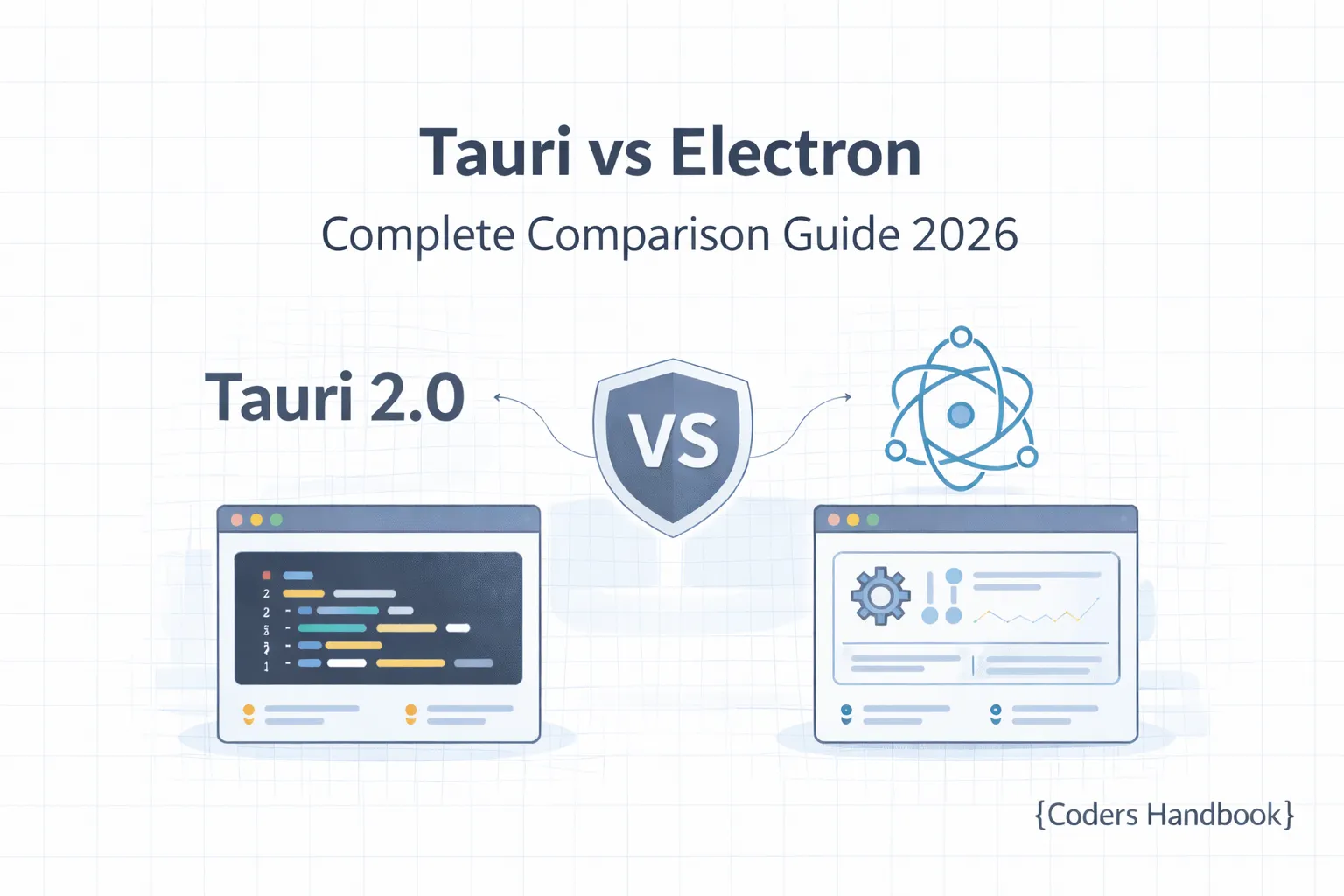
Choosing between Tauri 2.0 and Electron for desktop application development in 2026 requires understanding fundamental architectural differences, performance characteristics, bundle size implications, security models, development experiences, ecosystem maturity, and specific use case suitability that distinguish these two popular frameworks enabling developers to build cross-platform desktop applications using web technologies. Electron, developed by GitHub and powering applications like VS Code, Slack, Discord, and Microsoft Teams, bundles Chromium browser and Node.js runtime creating self-contained applications with consistent rendering across platforms but resulting in large bundle sizes (150MB+) and high memory consumption, while Tauri 2.0 leverages operating system native WebViews and Rust backend producing dramatically smaller bundles (3-5MB), reduced memory usage, enhanced security through process isolation, and faster startup times making it ideal for resource-conscious and security-critical applications. This comprehensive comparison examines architecture differences (bundled Chromium vs native WebView), performance metrics (bundle size, memory, startup time, CPU usage), security models (Node.js integration vs sandboxing), development experience (JavaScript/TypeScript vs Rust learning curve), ecosystem maturity (plugins, libraries, community support), platform compatibility (Windows, macOS, Linux, mobile), and real-world use cases helping developers make informed framework choices based on project requirements, team expertise, and application characteristics. Whether you're starting a new desktop project, considering migration from Electron to Tauri, evaluating frameworks for enterprise applications, or seeking optimal balance between development velocity and application efficiency, this detailed comparison provides the technical insights and practical guidance needed for confident decision-making. Before diving into comparison details, review Tauri fundamentals and architecture overview.
Quick Comparison Overview
| Aspect | Tauri 2.0 | Electron | Winner |
|---|---|---|---|
| Bundle Size | 3-5 MB | 150-200 MB | 🏆 Tauri (97% smaller) |
| Memory Usage | 50-100 MB | 200-500 MB | 🏆 Tauri (70% less) |
| Startup Time | < 1 second | 2-5 seconds | 🏆 Tauri (5x faster) |
| Backend Language | Rust | Node.js | 🏆 Tauri (performance) |
| Security | Sandboxed, no Node.js | Node.js integration risks | 🏆 Tauri (more secure) |
| Development Speed | Fast (web + Rust basics) | Very Fast (pure JavaScript) | 🏆 Electron (easier start) |
| Ecosystem Maturity | Growing (2+ years) | Mature (10+ years) | 🏆 Electron (more plugins) |
| Mobile Support | Yes (iOS/Android) | No (desktop only) | 🏆 Tauri (cross-platform) |
| Learning Curve | Moderate (learn Rust) | Easy (JavaScript only) | 🏆 Electron (familiar) |
| Community Size | ~80k GitHub stars | ~113k GitHub stars | 🏆 Electron (larger) |
Architecture Differences
Electron Architecture
Electron bundles Chromium browser engine and Node.js runtime into every application creating a self-contained environment where the Main Process runs Node.js for system operations and application lifecycle, Renderer Processes run Chromium for each window rendering HTML/CSS/JavaScript, and IPC Communication connects main and renderer processes. The bundled Chromium ensures consistent rendering across platforms regardless of system browser versions but adds 100-150MB to every application. Node.js integration in renderer processes (when enabled) provides full system access but creates security vulnerabilities if handling untrusted content. Electron apps run multiple processes (main process + one renderer per window) consuming significant memory even for simple applications.
Tauri Architecture
Tauri uses the operating system's native WebView for rendering eliminating the need to bundle browsers where the Core Process runs Rust backend handling all system operations, WebView Process uses platform-native rendering (Edge WebView2 on Windows, WebKit on macOS, WebKitGTK on Linux), and IPC Bridge enables secure command-based communication between frontend and backend. Native WebView means zero rendering engine bloat in application bundles, automatic updates when OS updates its WebView, consistent rendering with other system applications, and significantly reduced memory usage. Rust backend provides memory safety without garbage collection, near-native performance, and secure-by-default architecture. Learn more about Tauri architecture details.
# ELECTRON ARCHITECTURE
┌──────────────────────────────────────────┐
│         Electron Application             │
├──────────────────────────────────────────┤
│  Main Process (Node.js)                  │
│  ├─ App lifecycle                        │
│  ├─ System APIs                          │
│  └─ IPC handlers                         │
│                                          │
│  Renderer Process 1 (Chromium + Node.js) │
│  ├─ Window 1 UI                          │
│  ├─ JavaScript/React/Vue                 │
│  └─ Optional Node.js access              │
│                                          │
│  Renderer Process 2 (Chromium + Node.js) │
│  └─ Window 2 UI                          │
└──────────────────────────────────────────┘
Bundled: Chromium (~100MB) + Node.js (~50MB)
Total Size: 150-200 MB
Memory: 200-500 MB per app


# TAURI ARCHITECTURE
┌──────────────────────────────────────────┐
│          Tauri Application               │
├──────────────────────────────────────────┤
│  Core Process (Rust)                     │
│  ├─ Commands                             │
│  ├─ State management                     │
│  ├─ File system, APIs                    │
│  └─ IPC bridge                           │
│                    ▲                     │
│                    │ Secure IPC          │
│                    ▼                     │
│  WebView (OS Native - NOT bundled)       │
│  ├─ Edge WebView2 (Windows)              │
│  ├─ WebKit (macOS)                       │
│  ├─ WebKitGTK (Linux)                    │
│  └─ JavaScript/React/Vue                 │
└──────────────────────────────────────────┘
Bundled: Only app code
Total Size: 3-5 MB
Memory: 50-100 MB per app
Performance Comparison
Bundle Size Analysis
| Application Type | Tauri Size | Electron Size | Difference |
|---|---|---|---|
| Hello World (minimal) | 3 MB | 150 MB | 50x smaller |
| Simple CRUD app | 4-5 MB | 160-170 MB | 35x smaller |
| Complex app (React, DB) | 8-10 MB | 180-200 MB | 20x smaller |
| Feature-rich (plugins) | 12-15 MB | 200-250 MB | 15x smaller |
Bundle size differences have significant real-world implications: Download Time - Tauri apps download in seconds vs minutes for Electron on slower connections; Disk Space - Installing 10 Tauri apps uses 50MB vs 1.5GB for Electron apps; Update Distribution - Smaller updates download faster encouraging users to stay current; Corporate Environments - Easier deployment in bandwidth-constrained enterprise networks; Storage-Limited Devices - Better suited for devices with limited SSD space.
Memory Usage Comparison
| Scenario | Tauri Memory | Electron Memory | Savings |
|---|---|---|---|
| Idle (background) | 30-50 MB | 150-200 MB | 75% less |
| Active use (single window) | 50-100 MB | 200-300 MB | 65% less |
| Multiple windows (3) | 100-150 MB | 400-600 MB | 70% less |
| Heavy processing | 150-200 MB | 500-800 MB | 70% less |
Startup Time and CPU Usage
Startup performance affects user experience significantly. Tauri applications start in under 1 second (cold start) and under 500ms (warm start) because they load minimal code, use native WebView (no browser initialization), and benefit from Rust's fast compilation. Electron applications start in 2-5 seconds (cold) and 1-2 seconds (warm) due to Node.js runtime initialization, Chromium engine startup, and larger codebase loading. CPU usage during idle is minimal for both frameworks, but Tauri's Rust backend handles intensive operations more efficiently than Node.js, making it better for CPU-bound tasks like image processing, data parsing, or cryptographic operations.
Security Model Comparison
| Security Feature | Tauri 2.0 | Electron | Advantage |
|---|---|---|---|
| Process Isolation | ✅ Enforced (WebView isolated from Core) | ⚠️ Optional (nodeIntegration can disable) | Tauri |
| Content Security Policy | ✅ Enabled by default, enforced | ⚠️ Optional, often disabled for convenience | Tauri |
| System API Access | ✅ Explicit allowlist, command-based | ❌ Full Node.js access if enabled | Tauri |
| Remote Code Execution | ✅ Prevented by sandboxing | ⚠️ Possible with Node.js integration | Tauri |
| XSS Vulnerability Impact | ✅ Limited to WebView, no system access | ⚠️ Can access Node.js APIs if enabled | Tauri |
| Dependency Vulnerabilities | ✅ Rust/cargo ecosystem | ⚠️ npm ecosystem (more vulnerabilities) | Tauri |
| Memory Safety | ✅ Rust guarantees at compile-time | ⚠️ JavaScript runtime errors possible | Tauri |
nodeIntegration: true in renderer processes creates major security risks. Tauri's command-based system prevents entire classes of vulnerabilities. Learn more at Tauri security guide.Development Experience
Learning Curve and Prerequisites
| Aspect | Tauri | Electron |
|---|---|---|
| Frontend Knowledge | HTML/CSS/JavaScript (same as Electron) | HTML/CSS/JavaScript |
| Backend Language | Rust basics (functions, types, error handling) | JavaScript/Node.js (already familiar) |
| New Concepts | Rust ownership, IPC commands, allowlist | IPC between main/renderer, contextBridge |
| Time to First App | 2-3 hours (if new to Rust) | 1-2 hours (pure JavaScript) |
| Time to Production App | 1-2 weeks (learning Rust patterns) | 3-5 days (familiar stack) |
| Team Onboarding | Moderate (Rust training needed) | Easy (JavaScript developers ready) |
Development Tools and Workflow
Both frameworks provide excellent development tools but with different ecosystems. Tauri offers: Tauri CLI for project scaffolding and builds, Hot Module Replacement (HMR) for frontend changes, Rust compiler providing excellent error messages, Browser DevTools for frontend debugging, Rust debugging with lldb/gdb for backend; Electron provides: Electron Forge/Builder for packaging, Hot reload for both main and renderer, Node.js debugging tools (Chrome DevTools, VS Code), Electron DevTools extensions, Extensive npm package ecosystem. The Electron ecosystem is more mature with more pre-built solutions and examples, while Tauri requires learning Rust tooling but benefits from cargo's excellent package management and Rust's compiler assistance.
Ecosystem and Community
| Aspect | Tauri | Electron |
|---|---|---|
| Framework Age | 2+ years (v1: 2022, v2: 2024) | 10+ years (released 2013) |
| GitHub Stars | ~80,000 | ~113,000 |
| npm Downloads/week | ~50,000 | ~1,000,000 |
| Official Plugins | 10+ (store, SQL, fs, http, etc.) | Integrated (no separate plugins needed) |
| Community Plugins | Growing (~50+ packages) | Extensive (thousands of npm packages) |
| Production Apps | Hundreds (Rocket.Chat, GitKraken) | Thousands (VS Code, Slack, Discord) |
| Documentation Quality | Excellent (comprehensive guides) | Excellent (extensive docs) |
| Community Support | Active Discord, helpful community | Very active, StackOverflow answers |
When to Choose Which Framework
Choose Tauri When:
- Bundle Size Matters: Distributing over slow connections, storage-limited devices, or to cost-conscious users
- Security is Critical: Financial apps, healthcare, or handling sensitive user data requiring sandboxed architecture
- Performance Required: CPU-intensive operations (image/video processing, data analysis) benefit from Rust backend
- Memory Constraints: Targeting older hardware, running alongside memory-intensive applications
- Mobile Expansion: Planning to extend desktop app to iOS/Android (Tauri 2.0 supports mobile)
- Modern Stack: Team interested in learning Rust, building new applications from scratch
- Frequent Updates: Smaller bundles enable faster update distribution to users
Choose Electron When:
- Pure JavaScript Team: No bandwidth to learn Rust, need immediate productivity with familiar stack
- Rapid Prototyping: Building MVPs quickly, validating ideas before optimizing for size/performance
- Complex Node.js Integration: Heavy use of existing Node.js libraries, npm packages with native modules
- Mature Ecosystem Needs: Requiring specific plugins, tools only available in Electron ecosystem
- Consistent Rendering: Absolute consistency across platforms more important than bundle size
- Legacy Migration: Migrating existing Node.js backend to desktop without rewriting in Rust
- Enterprise Support: Established enterprise tooling, CI/CD pipelines built around Electron
Real-World Applications
Notable Tauri Applications
- Rocket.Chat Desktop: Team communication platform migrated to Tauri for 95% smaller bundle
- GitKraken Client: Git client using Tauri for performance and small footprint
- Clash Verge: Proxy client leveraging Rust backend for networking performance
- Aptabase: Analytics platform using Tauri for desktop dashboard
- CryptomatorDesktop: File encryption tool using Tauri for security-first architecture
Notable Electron Applications
- Visual Studio Code: Microsoft's flagship code editor (most popular IDE globally)
- Slack: Team communication platform (millions of daily users)
- Discord: Gaming/community communication (150+ million users)
- Figma Desktop: Design tool with complex rendering requirements
- Microsoft Teams: Enterprise communication platform
- Notion: All-in-one workspace and note-taking application
- Obsidian: Knowledge management and note-taking tool
Migration Path from Electron to Tauri
Migrating from Electron to Tauri requires strategic planning but offers substantial benefits. The migration process involves: Frontend Assessment - Most React/Vue/Svelte frontends work unchanged in Tauri; Backend Rewrite - Convert Node.js backend logic to Rust commands (main effort); IPC Refactoring - Replace Electron IPC with Tauri commands/events (straightforward mapping); Plugin Replacement - Find Tauri equivalents for Electron plugins or create custom plugins; Testing - Comprehensive testing on all target platforms ensuring native WebView compatibility; Build Pipeline - Update CI/CD for Rust compilation and Tauri builds. Teams typically migrate incrementally, starting with new features in Tauri while maintaining Electron codebase, or creating a Tauri version alongside Electron for gradual user migration.
Final Verdict and Recommendations
Both Tauri 2.0 and Electron are excellent frameworks for desktop application development, each excelling in different scenarios and requirements. Tauri 2.0 represents the future of desktop development for teams prioritizing application efficiency, security, and modern technology stacks, offering 97% smaller bundles, 70% less memory usage, enhanced security through Rust and sandboxing, mobile platform support, and native performance for intensive operations making it ideal for new projects, security-critical applications, resource-constrained environments, and teams comfortable learning Rust. Electron remains the pragmatic choice for teams needing rapid development with pure JavaScript, mature ecosystem with extensive plugins and libraries, large community and abundant learning resources, proven stability in thousands of production applications, and no Rust learning curve making it suitable for MVPs, teams without Rust expertise, applications heavily dependent on Node.js packages, and enterprises with established Electron infrastructure. For new projects in 2026, Tauri 2.0 is recommended unless specific constraints favor Electron, while existing Electron applications should evaluate migration based on bundle size impact, security requirements, and team capacity for Rust adoption. Start your Tauri journey with installation guide or beginner tutorial.
$ share --platform
$ cat /comments/ (0)
$ cat /comments/
// No comments found. Be the first!