Tauri 2.0 Global Shortcuts Keyboard Shortcuts System-Wide
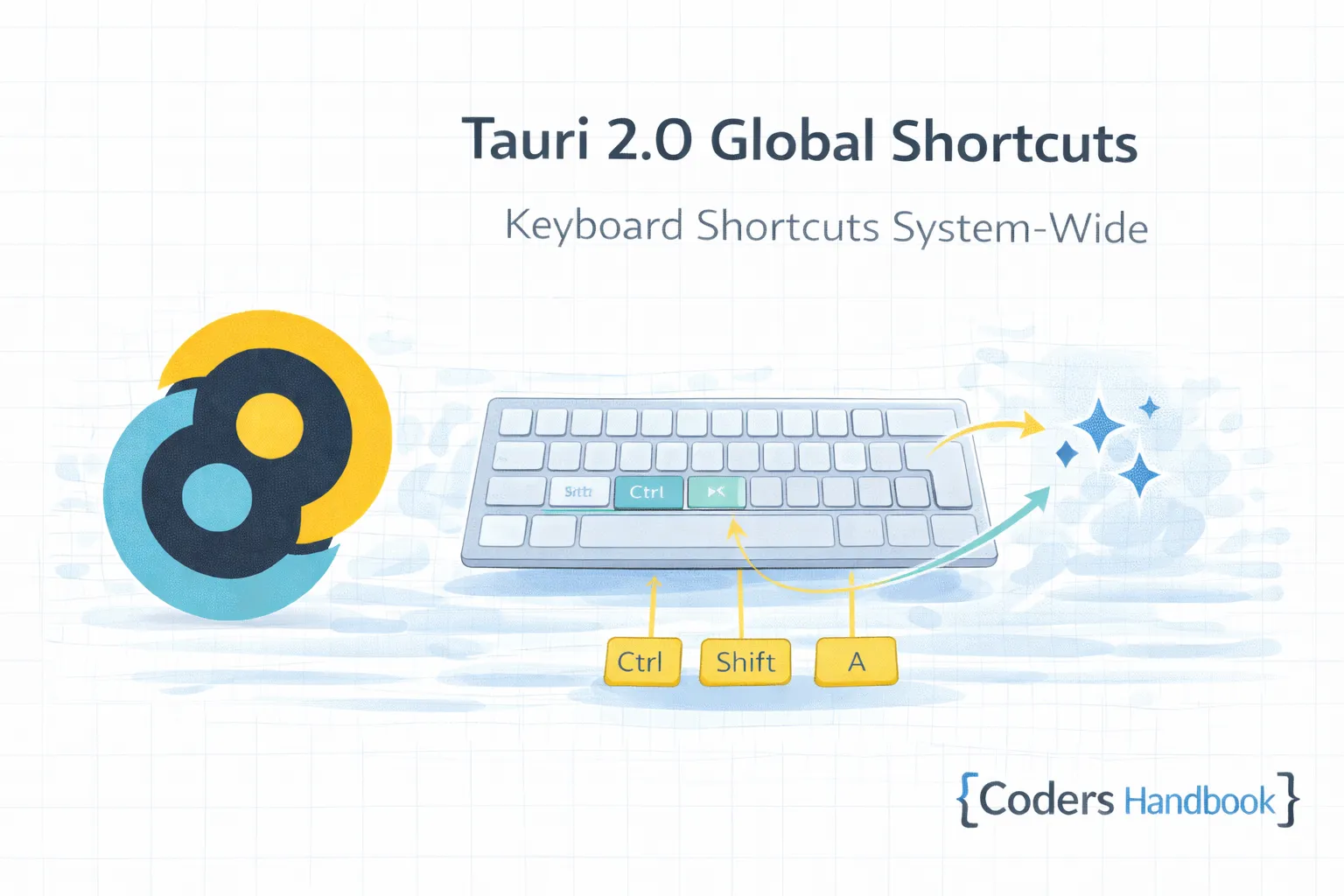
Global shortcuts in Tauri 2.0 enable desktop applications to register system-wide keyboard shortcuts working regardless of application focus providing instant access to functionality through hotkeys allowing users to trigger actions, show windows, control playback, capture screenshots, or execute commands without switching to application window—essential feature for productivity tools, media players, screen recorders, clipboard managers, and any application requiring quick keyboard-driven access maintaining workflow efficiency. Global shortcuts combine OS-level keyboard hook registration capturing key combinations before other applications with conflict detection preventing duplicate registrations, modifier key support enabling complex combinations using Ctrl, Alt, Shift, and platform-specific keys, shortcut management allowing runtime registration and unregistration, and cross-platform abstraction handling platform differences in key naming and behavior creating consistent keyboard shortcut experience across Windows, macOS, and Linux maintaining familiar patterns users expect from native applications. This comprehensive guide covers understanding global shortcut architecture and platform limitations, configuring shortcuts in tauri.conf.json for automatic registration, registering shortcuts dynamically at runtime with conflict handling, unregistering shortcuts when no longer needed, handling shortcut events executing callback functions, implementing shortcut customization with user preferences, managing shortcut conflicts with OS and other applications, building keyboard shortcut help UI showing available shortcuts, and creating real-world examples including screen capture tool with capture hotkeys, music player with playback controls, and productivity app with quick actions maintaining power-user efficiency through keyboard-driven workflows. Mastering global shortcut patterns enables building professional desktop applications providing expert users with keyboard access maintaining productivity without interrupting focus switching between windows or reaching for mouse maintaining efficient keyboard-centric workflows. Before proceeding, understand command creation and event handling.
Global Shortcut Configuration
Global shortcuts require enabling plugin in Cargo.toml and configuring permissions in tauri.conf.json. Understanding shortcut configuration integrated with application architecture enables building keyboard-driven applications maintaining system-wide hotkey access respecting OS limitations and user preferences.
// src-tauri/Cargo.toml
// Enable global shortcut plugin
[dependencies]
tauri = { version = "2.0", features = ["global-shortcut"] }

// src-tauri/tauri.conf.json
// Configure shortcut permissions
{
  "tauri": {
    "allowlist": {
      "globalShortcut": {
        "all": true
      }
    }
  }
}

// Rust: Register shortcuts at startup
use tauri::{
    AppHandle, GlobalShortcutManager, Manager,
};

fn register_global_shortcuts(app: &AppHandle) -> Result<(), Box<dyn std::error::Error>> {
    let mut shortcut_manager = app.global_shortcut_manager();

    // Register Ctrl+Shift+A to show window
    shortcut_manager.register("Ctrl+Shift+A", || {
        println!("Global shortcut triggered: Ctrl+Shift+A");
    })?;

    // Register Ctrl+Shift+Q to quit
    shortcut_manager.register("Ctrl+Shift+Q", || {
        std::process::exit(0);
    })?;

    println!("Global shortcuts registered");
    Ok(())
}

fn main() {
    tauri::Builder::default()
        .setup(|app| {
            register_global_shortcuts(&app.handle())?;
            Ok(())
        })
        .run(tauri::generate_context!())
        .expect("error while running tauri application");
}

// Register with app handle access
fn register_with_app_handle(
    app: &AppHandle,
) -> Result<(), Box<dyn std::error::Error>> {
    let app_handle = app.clone();
    let mut shortcut_manager = app.global_shortcut_manager();

    shortcut_manager.register("Ctrl+Shift+S", move || {
        // Show main window
        if let Some(window) = app_handle.get_window("main") {
            window.show().unwrap();
            window.set_focus().unwrap();
        }
    })?;

    Ok(())
}
Keyboard Combination Syntax
Keyboard combinations use string format specifying modifier keys and main key with plus signs separating components. Understanding syntax enables building complex shortcuts maintaining consistency across platforms while respecting platform-specific key naming conventions.
| Modifier | Windows/Linux | macOS | Example |
|---|---|---|---|
| Control | Ctrl | Cmd (Command) | Ctrl+C |
| Alt | Alt | Option | Alt+F4 |
| Shift | Shift | Shift | Shift+Delete |
| Super/Windows | Super/Win | Cmd | Super+L |
| Function Keys | F1-F12 | F1-F12 | F5 |
| Letter Keys | A-Z | A-Z | Ctrl+Shift+A |
| Number Keys | 0-9 | 0-9 | Ctrl+1 |
| Special Keys | Space, Enter, etc. | Space, Return, etc. | Ctrl+Space |
// Valid shortcut combinations
let shortcuts = vec![
    "Ctrl+A",                  // Single modifier + letter
    "Ctrl+Shift+A",           // Multiple modifiers
    "Alt+F4",                 // Alt combinations
    "Ctrl+Shift+Alt+K",       // Three modifiers
    "F5",                     // Function key alone
    "Ctrl+F5",                // Modifier + function key
    "Ctrl+1",                 // Modifier + number
    "Ctrl+Plus",              // Plus key
    "Ctrl+Space",             // Space key
    "Ctrl+Enter",             // Enter key
    "Shift+Escape",           // Escape key
];

// Platform-specific shortcuts
#[cfg(target_os = "macos")]
let mac_shortcuts = vec![
    "Cmd+Q",                  // Command key
    "Option+Cmd+Esc",         // Force quit menu
    "Cmd+Shift+3",            // Screenshot
];

#[cfg(not(target_os = "macos"))]
let other_shortcuts = vec![
    "Ctrl+Q",
    "Alt+F4",
    "PrintScreen",            // Screenshot
];

// Invalid combinations (will fail to register)
let invalid = vec![
    "ctrl+a",                 // Lowercase modifiers
    "Control+A",              // Wrong modifier name
    "Ctrl + A",               // Spaces not allowed
    "A",                      // Letter alone (conflicts)
];

// Register with validation
use tauri::GlobalShortcutManager;

fn register_shortcut_safe(
    manager: &mut impl GlobalShortcutManager,
    shortcut: &str,
    callback: impl Fn() + Send + 'static,
) -> Result<(), String> {
    manager
        .register(shortcut, callback)
        .map_err(|e| format!("Failed to register {}: {}", shortcut, e))
}
Dynamic Shortcut Registration
Dynamic registration enables adding and removing shortcuts at runtime based on user preferences or application state. Understanding dynamic management enables building customizable keyboard-driven applications maintaining flexibility through user-defined shortcuts respecting conflicts and preferences.
// Rust: Dynamic shortcut management with commands
use tauri::{AppHandle, Manager};
use std::sync::Mutex;
use std::collections::HashMap;

struct ShortcutRegistry {
    shortcuts: Mutex<HashMap<String, String>>, // action -> shortcut
}

impl ShortcutRegistry {
    fn new() -> Self {
        ShortcutRegistry {
            shortcuts: Mutex::new(HashMap::new()),
        }
    }
}

#[tauri::command]
fn register_shortcut(
    app: AppHandle,
    registry: tauri::State<ShortcutRegistry>,
    action: String,
    shortcut: String,
) -> Result<(), String> {
    let mut manager = app.global_shortcut_manager();

    // Unregister existing shortcut for this action
    let mut shortcuts = registry.shortcuts.lock().unwrap();
    if let Some(old_shortcut) = shortcuts.get(&action) {
        manager.unregister(old_shortcut)
            .map_err(|e| format!("Failed to unregister: {}", e))?;
    }

    // Clone for closure
    let action_name = action.clone();
    let app_handle = app.clone();

    // Register new shortcut
    manager.register(&shortcut, move || {
        // Emit event for this action
        app_handle.emit_all("shortcut-triggered", &action_name).ok();
    })
    .map_err(|e| format!("Failed to register: {}", e))?;

    // Store mapping
    shortcuts.insert(action, shortcut);

    Ok(())
}

#[tauri::command]
fn unregister_shortcut(
    app: AppHandle,
    registry: tauri::State<ShortcutRegistry>,
    action: String,
) -> Result<(), String> {
    let mut manager = app.global_shortcut_manager();
    let mut shortcuts = registry.shortcuts.lock().unwrap();

    if let Some(shortcut) = shortcuts.remove(&action) {
        manager.unregister(&shortcut)
            .map_err(|e| format!("Failed to unregister: {}", e))?;
    }

    Ok(())
}

#[tauri::command]
fn get_registered_shortcuts(
    registry: tauri::State<ShortcutRegistry>,
) -> HashMap<String, String> {
    let shortcuts = registry.shortcuts.lock().unwrap();
    shortcuts.clone()
}

#[tauri::command]
fn is_shortcut_registered(
    app: AppHandle,
    shortcut: String,
) -> bool {
    let manager = app.global_shortcut_manager();
    manager.is_registered(&shortcut).unwrap_or(false)
}

// Frontend: Register shortcuts dynamically
import { invoke } from "@tauri-apps/api/core";
import { listen } from "@tauri-apps/api/event";

// Register shortcut for action
async function registerShortcut(action: string, shortcut: string) {
  try {
    await invoke("register_shortcut", { action, shortcut });
    console.log(`Registered ${shortcut} for ${action}`);
  } catch (error) {
    console.error(`Failed to register shortcut: ${error}`);
    alert(`Could not register ${shortcut}. It may already be in use.`);
  }
}

// Listen for shortcut triggers
await listen("shortcut-triggered", (event) => {
  const action = event.payload as string;
  handleShortcutAction(action);
});

function handleShortcutAction(action: string) {
  switch (action) {
    case "show_window":
      // Show main window
      break;
    case "capture_screenshot":
      takeScreenshot();
      break;
    case "toggle_recording":
      toggleRecording();
      break;
    case "quick_note":
      openQuickNote();
      break;
    default:
      console.log(`Unknown action: ${action}`);
  }
}

// User preferences UI
async function saveShortcutPreference(
  action: string,
  shortcut: string
) {
  // Validate shortcut format
  if (!isValidShortcut(shortcut)) {
    alert("Invalid shortcut format");
    return;
  }

  // Check if already registered
  const isRegistered = await invoke("is_shortcut_registered", {
    shortcut,
  });

  if (isRegistered) {
    const confirm = window.confirm(
      `${shortcut} is already in use. Override?`
    );
    if (!confirm) return;
  }

  // Register
  await registerShortcut(action, shortcut);

  // Save to settings
  saveToSettings(action, shortcut);
}

function isValidShortcut(shortcut: string): boolean {
  // Basic validation
  const modifiers = ["Ctrl", "Alt", "Shift", "Cmd", "Super"];
  const parts = shortcut.split("+");
  return parts.length >= 1 && parts.every((p) => p.trim().length > 0);
}
Conflict Detection and Handling
Shortcut conflicts occur when attempting to register combinations already used by OS or other applications. Understanding conflict handling enables building robust keyboard shortcut systems maintaining graceful error handling providing alternative suggestions when conflicts detected.
// Rust: Conflict detection with fallbacks
use tauri::AppHandle;

struct ShortcutConfig {
    action: String,
    primary: String,
    fallbacks: Vec<String>,
}

impl ShortcutConfig {
    fn new(action: &str, primary: &str) -> Self {
        ShortcutConfig {
            action: action.to_string(),
            primary: primary.to_string(),
            fallbacks: Vec::new(),
        }
    }

    fn with_fallback(mut self, fallback: &str) -> Self {
        self.fallbacks.push(fallback.to_string());
        self
    }
}

fn register_with_fallback(
    app: &AppHandle,
    config: ShortcutConfig,
    callback: impl Fn() + Send + Clone + 'static,
) -> Result<String, String> {
    let mut manager = app.global_shortcut_manager();

    // Try primary shortcut
    let cb = callback.clone();
    if manager.register(&config.primary, cb).is_ok() {
        return Ok(config.primary);
    }

    // Try fallbacks
    for fallback in &config.fallbacks {
        let cb = callback.clone();
        if manager.register(fallback, cb).is_ok() {
            println!(
                "Primary shortcut '{}' unavailable, using '{}'",
                config.primary, fallback
            );
            return Ok(fallback.clone());
        }
    }

    Err(format!(
        "Could not register any shortcut for action '{}'",
        config.action
    ))
}

// Usage example
fn setup_shortcuts(app: &AppHandle) {
    let app_handle = app.clone();

    // Show window with fallbacks
    let show_config = ShortcutConfig::new("show_window", "Ctrl+Shift+A")
        .with_fallback("Ctrl+Alt+A")
        .with_fallback("Ctrl+Shift+H");

    if let Ok(registered) = register_with_fallback(
        app,
        show_config,
        move || {
            if let Some(window) = app_handle.get_window("main") {
                window.show().ok();
            }
        },
    ) {
        println!("Registered show window: {}", registered);
    }
}

// Common OS shortcuts to avoid
fn get_reserved_shortcuts() -> Vec<String> {
    vec![
        // Windows
        "Ctrl+Esc".to_string(),      // Start menu
        "Alt+F4".to_string(),         // Close window
        "Ctrl+Alt+Delete".to_string(), // Task manager
        "Win+L".to_string(),          // Lock screen

        // macOS
        "Cmd+Q".to_string(),          // Quit
        "Cmd+Tab".to_string(),        // App switcher
        "Cmd+Space".to_string(),      // Spotlight

        // Common
        "Ctrl+C".to_string(),         // Copy
        "Ctrl+V".to_string(),         // Paste
        "Ctrl+Z".to_string(),         // Undo
    ]
}

#[tauri::command]
fn validate_shortcut(
    shortcut: String,
) -> Result<(), String> {
    let reserved = get_reserved_shortcuts();

    if reserved.contains(&shortcut) {
        return Err(format!(
            "{} is reserved by the operating system",
            shortcut
        ));
    }

    Ok(())
}
Real-World Example: Screen Capture Tool
Screen capture application demonstrates complete global shortcut integration with capture hotkeys, region selection, clipboard copy, and file save shortcuts. Understanding real-world implementation enables building productivity tools maintaining keyboard-driven workflows respecting user preferences and avoiding conflicts.
// Complete screen capture with global shortcuts
use tauri::{AppHandle, Manager};

struct ScreenCaptureShortcuts;

impl ScreenCaptureShortcuts {
    fn register(app: &AppHandle) -> Result<(), Box<dyn std::error::Error>> {
        let mut manager = app.global_shortcut_manager();

        // Full screen capture: Ctrl+Shift+F
        let app1 = app.clone();
        manager.register("Ctrl+Shift+F", move || {
            app1.emit_all("capture-fullscreen", ()).ok();
        })?;

        // Region capture: Ctrl+Shift+R
        let app2 = app.clone();
        manager.register("Ctrl+Shift+R", move || {
            app2.emit_all("capture-region", ()).ok();
        })?;

        // Window capture: Ctrl+Shift+W
        let app3 = app.clone();
        manager.register("Ctrl+Shift+W", move || {
            app3.emit_all("capture-window", ()).ok();
        })?;

        // Quick clipboard: Ctrl+Shift+C
        let app4 = app.clone();
        manager.register("Ctrl+Shift+C", move || {
            app4.emit_all("capture-to-clipboard", ()).ok();
        })?;

        println!("Screen capture shortcuts registered");
        Ok(())
    }
}

#[tauri::command]
async fn capture_fullscreen() -> Result<String, String> {
    // Implement screen capture logic
    println!("Capturing full screen...");
    // Return path to saved image
    Ok("/path/to/screenshot.png".to_string())
}

#[tauri::command]
async fn capture_region(
    x: i32,
    y: i32,
    width: u32,
    height: u32,
) -> Result<String, String> {
    println!("Capturing region: {}x{} at {},{}", width, height, x, y);
    Ok("/path/to/screenshot.png".to_string())
}

#[tauri::command]
async fn capture_to_clipboard() -> Result<(), String> {
    println!("Capturing to clipboard...");
    // Copy screenshot to clipboard
    Ok(())
}

fn main() {
    tauri::Builder::default()
        .setup(|app| {
            ScreenCaptureShortcuts::register(&app.handle())?;
            Ok(())
        })
        .invoke_handler(tauri::generate_handler![
            capture_fullscreen,
            capture_region,
            capture_to_clipboard,
        ])
        .run(tauri::generate_context!())
        .expect("error while running tauri application");
}

// Frontend: Handle capture events
import { invoke } from "@tauri-apps/api/core";
import { listen } from "@tauri-apps/api/event";

// Listen for capture shortcuts
await listen("capture-fullscreen", async () => {
  const path = await invoke("capture_fullscreen");
  showNotification(`Screenshot saved to ${path}`);
});

await listen("capture-region", async () => {
  // Show region selector UI
  const region = await showRegionSelector();
  if (region) {
    const path = await invoke("capture_region", region);
    showNotification(`Screenshot saved to ${path}`);
  }
});

await listen("capture-to-clipboard", async () => {
  await invoke("capture_to_clipboard");
  showNotification("Screenshot copied to clipboard");
});

// Shortcut help overlay
function showShortcutHelp() {
  const shortcuts = [
    { key: "Ctrl+Shift+F", action: "Capture full screen" },
    { key: "Ctrl+Shift+R", action: "Capture region" },
    { key: "Ctrl+Shift+W", action: "Capture window" },
    { key: "Ctrl+Shift+C", action: "Capture to clipboard" },
  ];

  // Display shortcuts in UI
  displayShortcuts(shortcuts);
}
Global Shortcut Best Practices
- Use Multiple Modifiers: Combine 2-3 modifiers avoiding single-key conflicts
- Avoid Reserved Shortcuts: Don't register OS-reserved combinations like Ctrl+C
- Provide Fallbacks: Offer alternative shortcuts when primary unavailable
- Allow Customization: Let users configure their own shortcut preferences
- Show Shortcut Help: Provide UI displaying all available shortcuts
- Handle Errors Gracefully: Inform users when shortcuts fail to register
- Unregister on Exit: Clean up shortcuts when application closes
- Document Shortcuts: Include keyboard shortcuts in help documentation
- Test Cross-Platform: Verify shortcuts work on Windows, macOS, and Linux
- Respect Platform Conventions: Use Cmd on macOS, Ctrl on Windows/Linux
Next Steps
- Clipboard: Integrate with clipboard API
- System Tray: Combine with tray shortcuts
- Notifications: Trigger with notification alerts
- Window Management: Control with window actions
- Events: Coordinate with event system
Conclusion
Mastering global shortcuts in Tauri 2.0 enables building professional keyboard-driven desktop applications providing power users with instant access to functionality through system-wide hotkeys working regardless of application focus maintaining workflow efficiency without interrupting current tasks switching windows or reaching for mouse. Global shortcut system combines OS-level keyboard hook registration capturing key combinations system-wide with conflict detection preventing duplicate registrations, modifier key support enabling complex combinations using Ctrl, Alt, Shift, and platform keys, dynamic management allowing runtime registration and unregistration based on user preferences, and cross-platform abstraction handling platform differences in key naming and behavior creating consistent keyboard shortcut experience users expect from native applications. Understanding global shortcut patterns including configuration with proper modifier combinations avoiding conflicts, dynamic registration with fallback alternatives handling unavailability, conflict detection with reserved shortcut awareness respecting OS conventions, event handling executing callback functions responding to triggers, and real-world implementations like screen capture tools with capture hotkeys establishes foundation for building professional desktop applications delivering keyboard-centric workflows maintaining power-user efficiency through instant hotkey access without demanding mouse interaction or window switching. Your Tauri applications now possess powerful global shortcut capabilities enabling features like instant window activation, quick action triggers, background operation controls, and keyboard-driven workflows delivering professional desktop experiences maintaining productivity through efficient keyboard access integrated seamlessly with native OS shortcut systems respecting platform conventions and user preferences!
$ share --platform
$ cat /comments/ (0)
$ cat /comments/
// No comments found. Be the first!