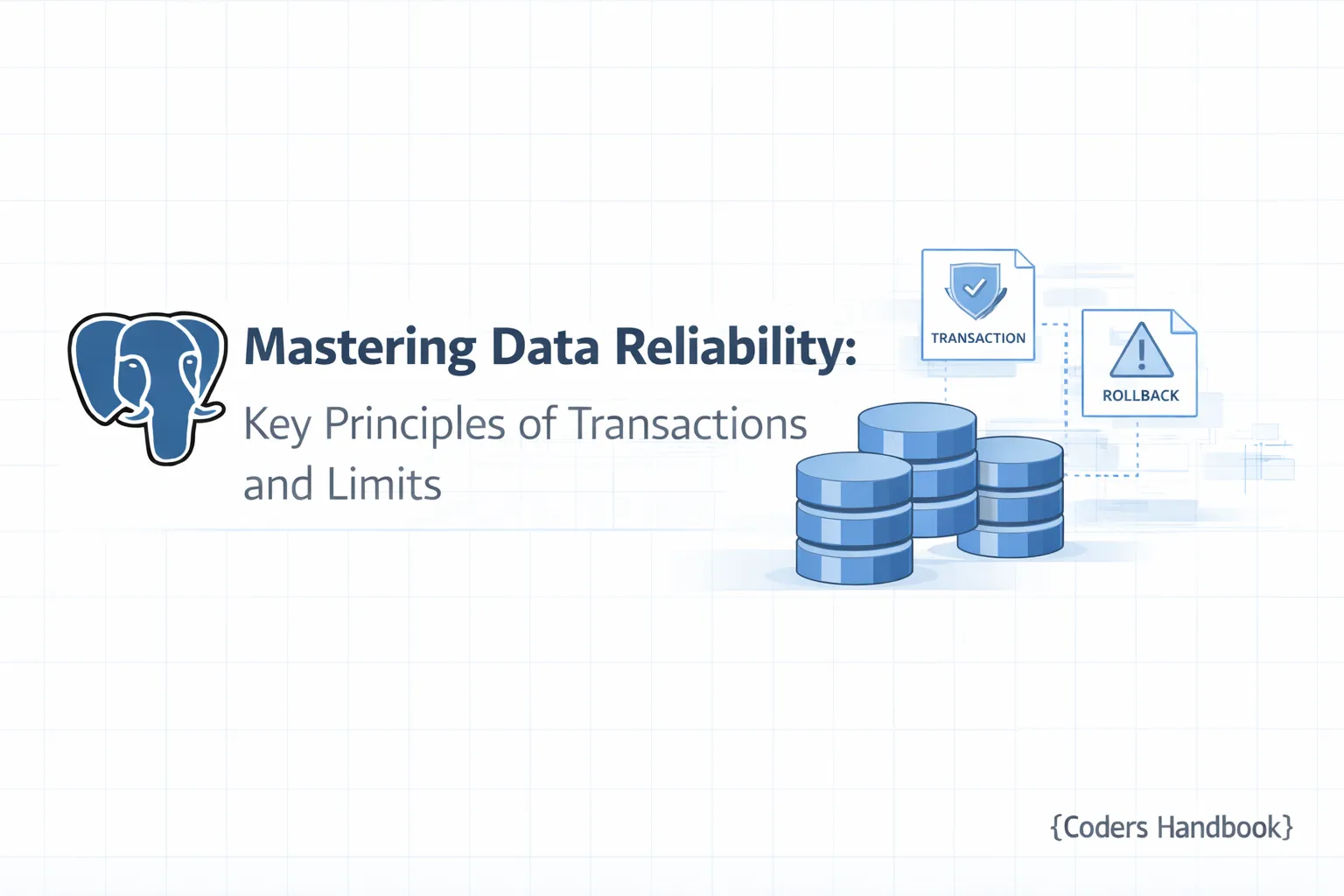
Mastering Data Reliability: Key Principles of Transactions and Limits
Constraints, Transactions, and Data Integrity in PostgreSQL
Prerequisites
Before diving into this tutorial, ensure you have a basic understanding of PostgreSQL and SQL syntax. Familiarity with database concepts from previous parts of this series, particularly Part 4 (Mastering SQL Fundamentals) and Part 5 (Unlocking Data Retrieval), will be beneficial.
Introduction
In the realm of database management systems (DBMS), particularly with PostgreSQL, constraints and transactions play a pivotal role in maintaining data integrity. In this tutorial, we will explore the definitions and importance of constraints, the role of transactions, and how both can ensure the reliability and accuracy of your data. By the end of this guide, you will understand how to effectively implement constraints and transactions in PostgreSQL, ensuring your database remains robust and trustworthy.
Understanding Constraints in Database Management
Constraints are rules enforced on data columns in a database table. They ensure the accuracy and reliability of the data within the database. By defining constraints, you can prevent errors, maintain data integrity, and enforce business rules directly at the database level.
Key Types of Constraints
- Primary Key: Uniquely identifies each record in a table. No two rows can have the same primary key value.
- Foreign Key: Enforces a link between the data in two tables. It ensures that the values in one table match values in another.
- Unique: Ensures that all values in a column are different from each other.
- Check: Validates that the values in a column meet certain criteria.
- Not Null: Ensures that a column cannot accept null values.
Step 1: Creating a Table with Constraints
Let's create a sample table with different constraints in PostgreSQL.
CREATE TABLE employees (
    employee_id SERIAL PRIMARY KEY,
    first_name VARCHAR(50) NOT NULL,
    last_name VARCHAR(50) NOT NULL,
    email VARCHAR(100) UNIQUE,
    department_id INT,
    CONSTRAINT fk_department
        FOREIGN KEY(department_id)
        REFERENCES departments(department_id),
    CHECK (salary > 0)
);
Expected Output: This command creates a table named employees with various constraints applied.
The Role of Transactions in Ensuring Data Integrity
Transactions are sequences of operations performed as a single logical unit of work. They ensure that either all operations within the transaction are completed successfully, or none are applied, thus maintaining data integrity.
Step 2: Understanding ACID Properties
Transactions in PostgreSQL adhere to the ACID properties:
- Atomicity: Ensures that a transaction is treated as a single unit. If one part fails, the entire transaction fails.
- Consistency: Ensures that a transaction brings the database from one valid state to another.
- Isolation: Ensures that transactions operate independently without interference.
- Durability: Guarantees that once a transaction is committed, it remains persistent even in case of a system failure.
Step 3: Implementing a Transaction
Let’s see how to use transactions in PostgreSQL.
BEGIN;

INSERT INTO employees (first_name, last_name, email, department_id)
VALUES ('John', 'Doe', '[email protected]', 1);

-- Uncomment the next line to simulate an error
-- INSERT INTO employees (first_name, last_name, email, department_id) VALUES ('Jane', 'Smith', NULL, 2);

COMMIT;
Expected Output: If everything goes well, both inserts will be committed. If there’s an error, nothing will be committed.
Implementing Data Integrity: Best Practices and Strategies
To ensure data integrity in your database:
- Use Appropriate Constraints: Always define primary keys, foreign keys, and unique constraints where applicable.
- Validate Data Inputs: Use check constraints to enforce data rules.
- Leverage Transactions: Use transactions to batch operations and maintain consistency.
- Regularly Backup Data: Ensure backups are in place to recover from potential data loss.
Common Challenges with Constraints and Transactions
- Constraint Violations: If you try to insert a duplicate value into a column with a unique constraint, PostgreSQL will raise an error.
- Deadlocks: When multiple transactions are waiting for each other to release locks, leading to a standstill.
- Performance Issues: Overusing constraints can slow down data modifications.
Troubleshooting Tips
- Check error messages when constraints are violated to understand what went wrong.
- Use the PostgreSQL
pg_lockssystem view to identify and resolve deadlocks.
Tools and Techniques for Managing Data Integrity
- Database Management Tools: Use tools like pgAdmin or DBeaver to visualize and manage constraints.
- Automated Testing: Implement unit tests for your database operations to catch issues early.
- Monitoring: Use PostgreSQL logging and monitoring tools to keep an eye on transaction performance and integrity issues.
Real-World Applications of Constraints and Transactions in Databases
Consider a retail database where constraints ensure that:
- Each product has a unique identifier (primary key).
- Orders reference valid products (foreign key).
- Prices are always positive (check constraint).
Case Study
In a banking application, ACID transactions are crucial. A funds transfer between accounts must ensure that both the debit and credit operations succeed or fail together. If a transaction fails after debiting but before crediting, the system must revert to the original state to prevent data inconsistency.
Conclusion
In this tutorial, we've explored the crucial roles of constraints and transactions in maintaining data integrity within PostgreSQL. By effectively implementing primary keys, foreign keys, unique constraints, and leveraging the ACID properties of transactions, you can ensure that your data remains accurate and reliable.
As we continue this series on PostgreSQL, stay tuned for our next tutorial where we will delve into advanced performance tuning techniques to optimize your database operations. Don't forget to apply the best practices discussed here to enhance the integrity and reliability of your database. Happy coding!
$ share --platform
$ cat /comments/ (0)
$ cat /comments/
// No comments found. Be the first!