Supabase Multi-Tenancy: Building SaaS Applications
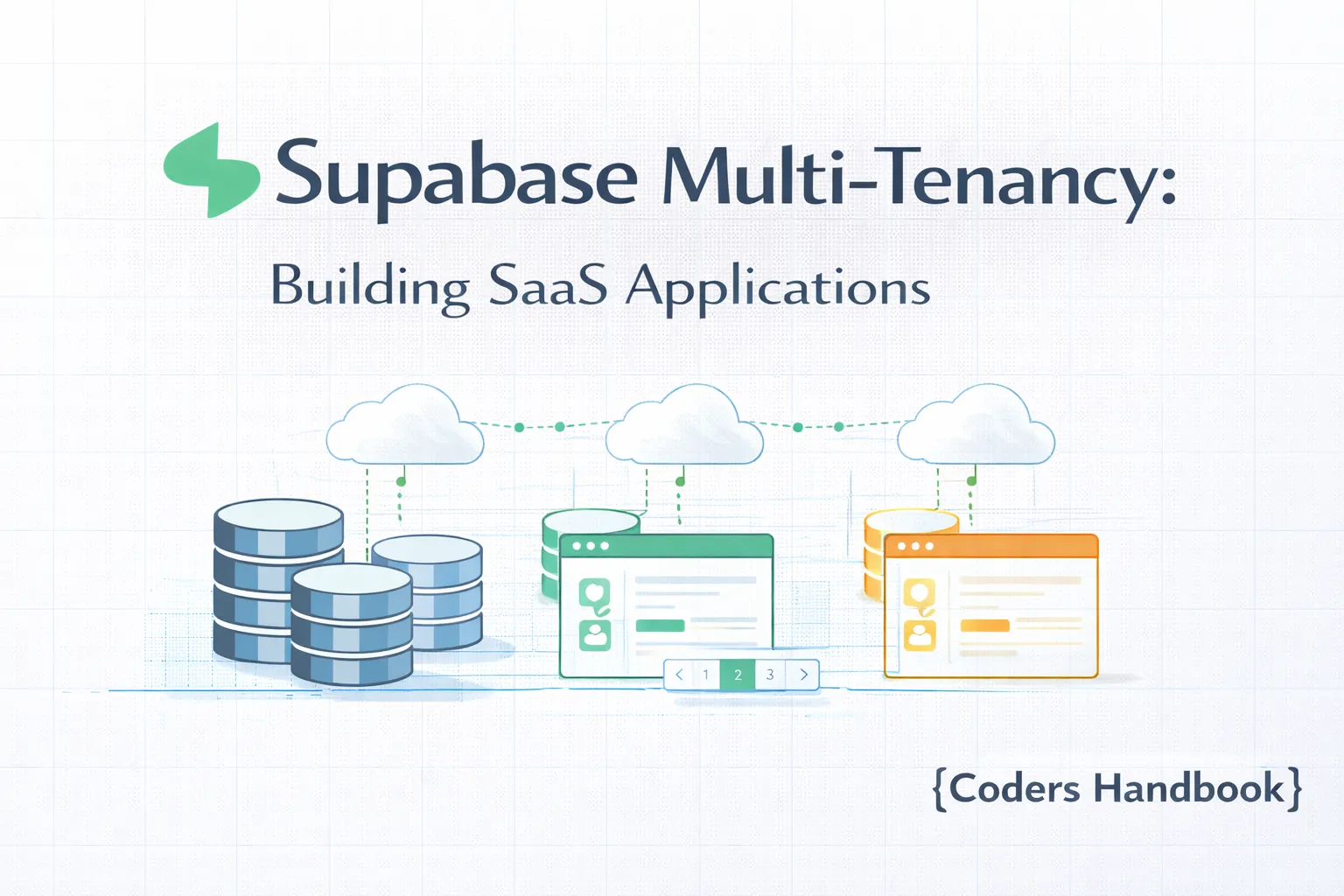
Multi-tenancy architecture enables SaaS applications to serve multiple customers (tenants) from a single codebase and database while maintaining complete data isolation, preventing cross-tenant data leaks, enforcing tenant-specific access control, and optimizing resource utilization. Unlike single-tenant applications where each customer requires separate infrastructure and databases, multi-tenant systems share resources efficiently while guaranteeing security boundaries ensuring tenants never access each other's data. This comprehensive guide covers understanding multi-tenancy patterns and tradeoffs, implementing Row Level Security for tenant isolation, designing database schemas with tenant_id columns, building tenant-aware authentication flows, creating organization management features, implementing team member invitations, enforcing tenant context throughout applications, handling tenant-specific customizations, and scaling multi-tenant architectures. Multi-tenancy becomes essential for SaaS products, B2B platforms, collaborative tools, project management systems, or any application serving multiple organizations where data isolation, security, and efficient resource usage are critical. Before proceeding, understand Row Level Security, authentication, and migrations.
Multi-Tenancy Patterns
| Pattern | Pros | Cons | Best For |
|---|---|---|---|
| Shared Database + RLS | Simple, cost-effective | Complex RLS policies | Most SaaS apps |
| Separate Schemas | Better isolation | Schema management overhead | Enterprise customers |
| Separate Databases | Complete isolation | High cost, complex | Regulated industries |
| Hybrid | Flexible per tenant | Most complex | Multi-tier SaaS |
Multi-Tenant Database Schema
-- Organizations table (tenants)
create table organizations (
  id uuid default gen_random_uuid() primary key,
  name text not null,
  slug text unique not null,
  plan text not null default 'free', -- free, pro, enterprise
  created_at timestamp with time zone default now(),
  updated_at timestamp with time zone default now()
);

-- Organization members (team membership)
create table organization_members (
  id uuid default gen_random_uuid() primary key,
  organization_id uuid references organizations(id) on delete cascade not null,
  user_id uuid references auth.users(id) on delete cascade not null,
  role text not null default 'member', -- owner, admin, member
  created_at timestamp with time zone default now(),
  unique(organization_id, user_id)
);

create index org_members_org_id_idx on organization_members(organization_id);
create index org_members_user_id_idx on organization_members(user_id);

-- Multi-tenant data tables (with tenant_id)
create table projects (
  id uuid default gen_random_uuid() primary key,
  organization_id uuid references organizations(id) on delete cascade not null,
  name text not null,
  description text,
  created_by uuid references auth.users(id),
  created_at timestamp with time zone default now(),
  updated_at timestamp with time zone default now()
);

create index projects_org_id_idx on projects(organization_id);

create table tasks (
  id uuid default gen_random_uuid() primary key,
  organization_id uuid references organizations(id) on delete cascade not null,
  project_id uuid references projects(id) on delete cascade not null,
  title text not null,
  description text,
  assigned_to uuid references auth.users(id),
  status text not null default 'todo',
  created_at timestamp with time zone default now(),
  updated_at timestamp with time zone default now()
);

create index tasks_org_id_idx on tasks(organization_id);
create index tasks_project_id_idx on tasks(project_id);
Row Level Security Policies
-- Enable RLS on all tenant tables
alter table organizations enable row level security;
alter table organization_members enable row level security;
alter table projects enable row level security;
alter table tasks enable row level security;

-- Helper function: Get user's organizations
create or replace function get_user_organizations()
returns setof uuid
language sql
security definer
as $$
  select organization_id
  from organization_members
  where user_id = auth.uid();
$$;

-- Organizations policies
create policy "Users can view their organizations"
  on organizations for select
  using ( id in (select get_user_organizations()) );

create policy "Users can update organizations they own"
  on organizations for update
  using (
    exists (
      select 1 from organization_members
      where organization_id = id
      and user_id = auth.uid()
      and role = 'owner'
    )
  );

-- Organization members policies
create policy "Users can view members of their organizations"
  on organization_members for select
  using ( organization_id in (select get_user_organizations()) );

create policy "Admins can invite members"
  on organization_members for insert
  with check (
    exists (
      select 1 from organization_members
      where organization_id = organization_members.organization_id
      and user_id = auth.uid()
      and role in ('owner', 'admin')
    )
  );

-- Projects policies
create policy "Users can view projects in their organizations"
  on projects for select
  using ( organization_id in (select get_user_organizations()) );

create policy "Users can create projects in their organizations"
  on projects for insert
  with check ( organization_id in (select get_user_organizations()) );

create policy "Users can update projects in their organizations"
  on projects for update
  using ( organization_id in (select get_user_organizations()) );

create policy "Users can delete projects in their organizations"
  on projects for delete
  using ( organization_id in (select get_user_organizations()) );

-- Tasks policies (same pattern)
create policy "Users can view tasks in their organizations"
  on tasks for select
  using ( organization_id in (select get_user_organizations()) );

create policy "Users can create tasks in their organizations"
  on tasks for insert
  with check ( organization_id in (select get_user_organizations()) );

create policy "Users can update tasks in their organizations"
  on tasks for update
  using ( organization_id in (select get_user_organizations()) );

create policy "Users can delete tasks in their organizations"
  on tasks for delete
  using ( organization_id in (select get_user_organizations()) );
Managing Tenant Context
// contexts/OrganizationContext.tsx
import { createContext, useContext, useState, useEffect, ReactNode } from 'react'
import { supabase } from '../lib/supabaseClient'

interface Organization {
  id: string
  name: string
  slug: string
  plan: string
}

interface OrganizationContextType {
  currentOrg: Organization | null
  organizations: Organization[]
  switchOrganization: (orgId: string) => void
  loading: boolean
}

const OrganizationContext = createContext<OrganizationContextType | undefined>(undefined)

export function OrganizationProvider({ children }: { children: ReactNode }) {
  const [currentOrg, setCurrentOrg] = useState<Organization | null>(null)
  const [organizations, setOrganizations] = useState<Organization[]>([])
  const [loading, setLoading] = useState(true)

  useEffect(() => {
    fetchUserOrganizations()
  }, [])

  async function fetchUserOrganizations() {
    const { data: memberships } = await supabase
      .from('organization_members')
      .select(`
        organization_id,
        organizations (
          id,
          name,
          slug,
          plan
        )
      `)

    const orgs = memberships?.map(m => m.organizations).filter(Boolean) || []
    setOrganizations(orgs)

    // Set current org from localStorage or first org
    const savedOrgId = localStorage.getItem('currentOrgId')
    const org = orgs.find(o => o.id === savedOrgId) || orgs[0]
    setCurrentOrg(org || null)
    setLoading(false)
  }

  function switchOrganization(orgId: string) {
    const org = organizations.find(o => o.id === orgId)
    if (org) {
      setCurrentOrg(org)
      localStorage.setItem('currentOrgId', orgId)
    }
  }

  return (
    <OrganizationContext.Provider value={{
      currentOrg,
      organizations,
      switchOrganization,
      loading
    }}>
      {children}
    </OrganizationContext.Provider>
  )
}

export function useOrganization() {
  const context = useContext(OrganizationContext)
  if (!context) {
    throw new Error('useOrganization must be used within OrganizationProvider')
  }
  return context
}
Organization Switcher Component
// components/OrganizationSwitcher.tsx
import { useOrganization } from '../contexts/OrganizationContext'

export function OrganizationSwitcher() {
  const { currentOrg, organizations, switchOrganization } = useOrganization()

  return (
    <div className="org-switcher">
      <select
        value={currentOrg?.id || ''}
        onChange={(e) => switchOrganization(e.target.value)}
        className="org-select"
      >
        {organizations.map(org => (
          <option key={org.id} value={org.id}>
            {org.name} ({org.plan})
          </option>
        ))}
      </select>
    </div>
  )
}

// Usage in layout
import { OrganizationProvider } from './contexts/OrganizationContext'
import { OrganizationSwitcher } from './components/OrganizationSwitcher'

function App() {
  return (
    <OrganizationProvider>
      <nav>
        <OrganizationSwitcher />
      </nav>
      {/* Rest of app */}
    </OrganizationProvider>
  )
}
Tenant-Aware Data Queries
// hooks/useProjects.ts
import { useState, useEffect } from 'react'
import { supabase } from '../lib/supabaseClient'
import { useOrganization } from '../contexts/OrganizationContext'

export function useProjects() {
  const { currentOrg } = useOrganization()
  const [projects, setProjects] = useState([])
  const [loading, setLoading] = useState(true)

  useEffect(() => {
    if (currentOrg) {
      fetchProjects()
    }
  }, [currentOrg])

  async function fetchProjects() {
    if (!currentOrg) return

    setLoading(true)

    const { data, error } = await supabase
      .from('projects')
      .select('*')
      .eq('organization_id', currentOrg.id)
      .order('created_at', { ascending: false })

    if (!error) {
      setProjects(data || [])
    }
    setLoading(false)
  }

  async function createProject(name: string, description: string) {
    if (!currentOrg) return

    const { data, error } = await supabase
      .from('projects')
      .insert({
        organization_id: currentOrg.id,
        name,
        description
      })
      .select()
      .single()

    if (!error) {
      setProjects(prev => [data, ...prev])
    }

    return { data, error }
  }

  return { projects, loading, createProject, refetch: fetchProjects }
}

// Usage in component
function ProjectsList() {
  const { projects, loading, createProject } = useProjects()
  const { currentOrg } = useOrganization()

  if (!currentOrg) {
    return <div>Please select an organization</div>
  }

  if (loading) return <div>Loading...</div>

  return (
    <div>
      <h2>Projects for {currentOrg.name}</h2>
      {projects.map(project => (
        <div key={project.id}>
          <h3>{project.name}</h3>
          <p>{project.description}</p>
        </div>
      ))}
    </div>
  )
}
Team Member Management
// Team invitation function
create or replace function invite_team_member(
  org_id uuid,
  invitee_email text,
  member_role text default 'member'
)
returns json
language plpgsql
security definer
as $$
declare
  inviter_role text;
  invitee_user_id uuid;
begin
  -- Check if inviter has permission
  select role into inviter_role
  from organization_members
  where organization_id = org_id
  and user_id = auth.uid();

  if inviter_role not in ('owner', 'admin') then
    raise exception 'Only owners and admins can invite members';
  end if;

  -- Check if user exists
  select id into invitee_user_id
  from auth.users
  where email = invitee_email;

  if invitee_user_id is null then
    -- Send invitation email (implement with Edge Function)
    return json_build_object(
      'status', 'invitation_sent',
      'email', invitee_email
    );
  end if;

  -- Add user to organization
  insert into organization_members (organization_id, user_id, role)
  values (org_id, invitee_user_id, member_role)
  on conflict (organization_id, user_id) do nothing;

  return json_build_object(
    'status', 'member_added',
    'user_id', invitee_user_id
  );
end;
$$;

// React component for team management
import { useState } from 'react'
import { supabase } from '../lib/supabaseClient'
import { useOrganization } from '../contexts/OrganizationContext'

function TeamManagement() {
  const { currentOrg } = useOrganization()
  const [members, setMembers] = useState([])
  const [email, setEmail] = useState('')
  const [role, setRole] = useState('member')

  async function inviteMember() {
    const { data, error } = await supabase
      .rpc('invite_team_member', {
        org_id: currentOrg.id,
        invitee_email: email,
        member_role: role
      })

    if (!error) {
      alert('Invitation sent!')
      setEmail('')
    }
  }

  return (
    <div>
      <h2>Team Members</h2>

      <div className="invite-form">
        <input
          type="email"
          value={email}
          onChange={(e) => setEmail(e.target.value)}
          placeholder="Email address"
        />
        <select value={role} onChange={(e) => setRole(e.target.value)}>
          <option value="member">Member</option>
          <option value="admin">Admin</option>
        </select>
        <button onClick={inviteMember}>Invite</button>
      </div>
    </div>
  )
}
Multi-Tenancy Best Practices
- Always Include organization_id: Add organization_id to every tenant-scoped table for proper isolation
- Index Tenant Columns: Create indexes on organization_id for fast tenant-specific queries
- Use RLS for Enforcement: Rely on RLS policies instead of application logic for security
- Test Isolation Thoroughly: Verify users cannot access other tenants' data under any circumstance
- Handle Tenant Context Carefully: Always check currentOrg exists before queries
- Plan for Scaling: Design for tenant growth from day one with proper indexing
- Audit Tenant Access: Log organization switches and cross-tenant access attempts
Common Issues
- Users See Other Tenants' Data: Verify RLS policies are enabled and correctly filter by organization_id
- Slow Tenant Queries: Add indexes on organization_id columns for faster filtering
- Context Not Persisting: Use localStorage or cookies to save current organization across sessions
- Invitation Flow Broken: Implement proper email verification and pending invitations table
Next Steps
- Add Framework Integration: Implement in React apps, Next.js, or Vue.js
- Use TypeScript: Build type-safe multi-tenant apps with proper types
- Manage Schema: Use migrations to track multi-tenant schema changes
- Add Billing: Implement subscription management with Stripe for different tenant plans
Conclusion
Multi-tenancy architecture enables SaaS applications to serve multiple customers from shared infrastructure while maintaining complete data isolation through Row Level Security policies, organization_id columns on all tenant tables, and proper context management throughout application lifecycle. By implementing RLS policies filtering all queries by organization membership, creating organization and member management tables, building tenant context providers maintaining current organization state, designing tenant-aware hooks automatically including organization filters, and enforcing security at database level rather than application code, you build secure SaaS platforms. Multi-tenant patterns include shared database with RLS for most applications balancing simplicity and security, separate schemas for enterprise customers requiring stronger isolation, or separate databases for regulated industries with strictest requirements. Always include organization_id on tenant tables, create indexes on these columns for performance, test RLS policies thoroughly preventing cross-tenant access, handle organization context carefully checking existence, and rely on database-level security over client filtering. Multi-tenancy becomes essential for SaaS products, B2B platforms, collaborative tools, and any application serving multiple organizations where data isolation and efficient resource usage are critical. Continue building production SaaS with Next.js integration, TypeScript safety, and migration workflows.
$ share --platform
$ cat /comments/ (0)
$ cat /comments/
// No comments found. Be the first!